Contribute to Product UX Design News
Posting original articles or featured news recaps here requires registration and a published UX professional profile.
Once your profile is approved and published, you may submit articles for review.
Contact us with any questions. Thanks! 😊
Graph foundation models for relational data
Treating relational tables as interconnected graphs powered by advances in graph learning enables training foundational models that generalize to arbitrary tables, features, and tasks.

MedGemma: Our most capable open models for health AI development
We’re announcing new multimodal models in the MedGemma collection, our most capable open models for health AI development.

Making group conversations more accessible with sound localization
We explore an approach that uses multi-microphone localization to enhance mobile captioning with speaker diarization and directional guidance.

How we created HOV-specific ETAs in Google Maps
Through a novel classification approach we added a new feature of HOV routing and ETAs.

REGEN: Empowering personalized recommendations with natural language
We present a new benchmark dataset to help LLMs provide more contextualized recommendations through natural language interactions.

MUVERA: Making multi-vector retrieval as fast as single-vector search
We introduce MUVERA, a state-of-the-art retrieval algorithm that reduces complex multi-vector retrieval back to single-vector maximum inner product search.

From research to climate resilience
Google Research is driving AI breakthroughs to help communities bolster their resilience to climate-related threats.

Unlocking rich genetic insights through multimodal AI with M-REGLE
M-REGLE (Multimodal REpresentation learning for Genetic discovery on Low-dimensional Embeddings) is an AI method that simultaneously analyzes multiple health data streams. Jointly learning from …

A colorful quantum future
We present results showing the implementation of “color codes” for quantum error correction on a superconducting qubit platform.

Optimizing LLM-based trip planning
We present a method for solving planning problems by using LLMs to interpret qualitative goals and optimization algorithms to handle quantitative constraints.

Zooming in: Efficient regional environmental risk assessment with generative AI
We present a new method that combines physics-based climate modeling with artificial intelligence to create detailed estimates of regional environmental risk. This approach enables a more …

Learning to clarify: Multi-turn conversations with Action-Based Contrastive Self-Training
We propose Action-Based Contrastive Self-Training, a data-efficient contrastive reinforcement learning tuning approach for improved multi-turn conversation modeling in mixed-initiative …

Fine-tuning LLMs with user-level differential privacy
We investigate and improve algorithms for fine-tuning large models with user-level differential privacy.
Google Research at Google I/O 2025
We celebrate Google Research highlights from I/O 2025, including our latest research breakthroughs and our contributions to Google’s Gemini models and generative AI products.

Deeper insights into retrieval augmented generation: The role of sufficient context
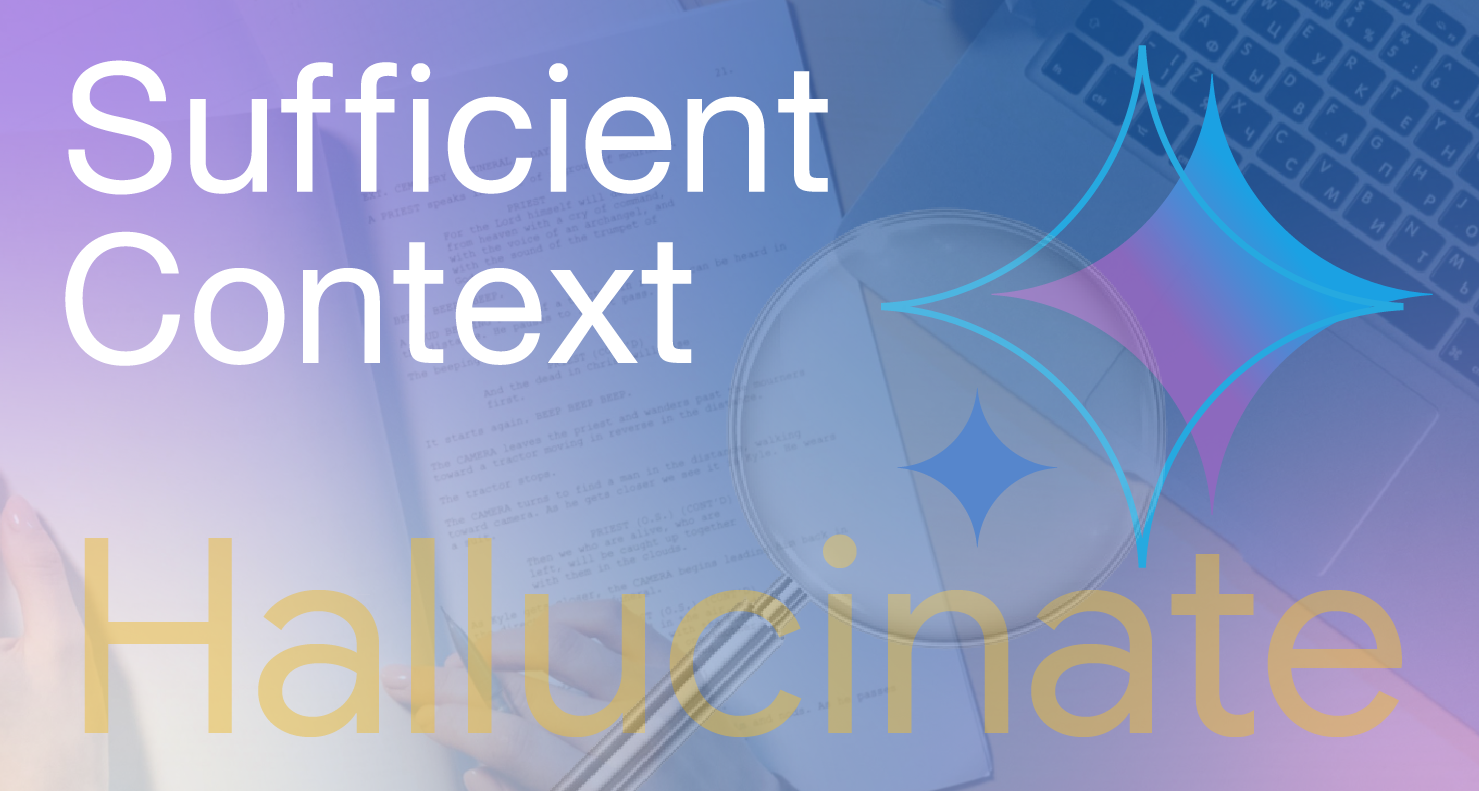
We introduce a new notion of sufficient context to examine retrieval augmented generation (RAG) systems, developing a method to classify instances, analyzing failures of RAG systems, and …
Differential privacy on trust graphs
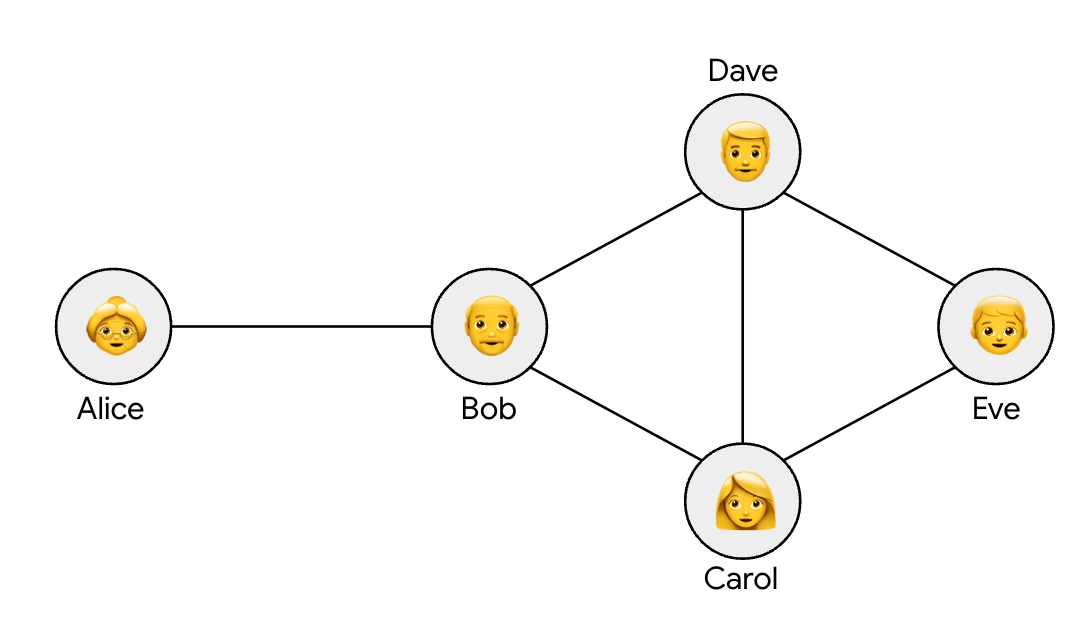
We propose a new model for differential privacy that incorporates different trust assumptions between users, and devise several algorithms and lower bounds in this model.
Bringing 3D shoppable products online with generative AI
Discover how our latest AI models transform 2D product images into immersive 3D experiences for online shoppers.

A new light on neural connections
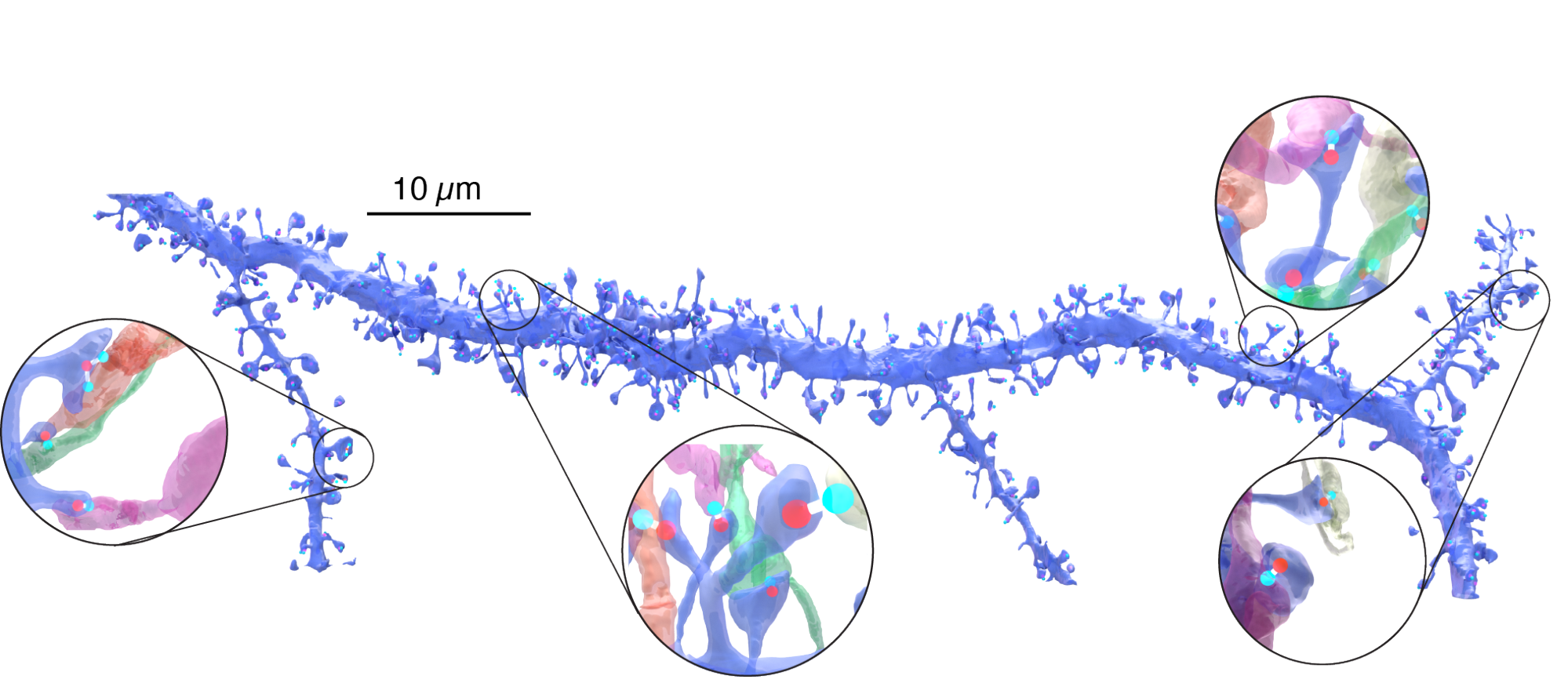
In collaboration with the Institute of Science and Technology Austria (ISTA), we published in Nature the first-ever method for using light microscopy to comprehensively map all the neurons and …
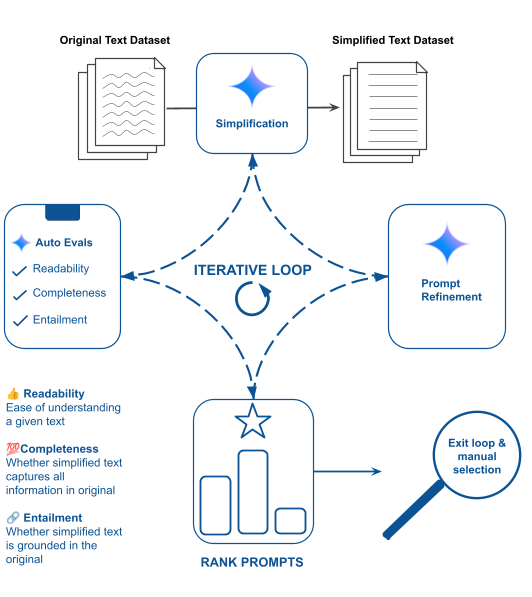
Making complex text understandable: Minimally-lossy text simplification with Gemini
This study demonstrates the potential of LLMs for accessible information dissemination, allowing expert knowledge to reach a broader audience without compromising accuracy.
Amplify Initiative: Localized data for globalized AI
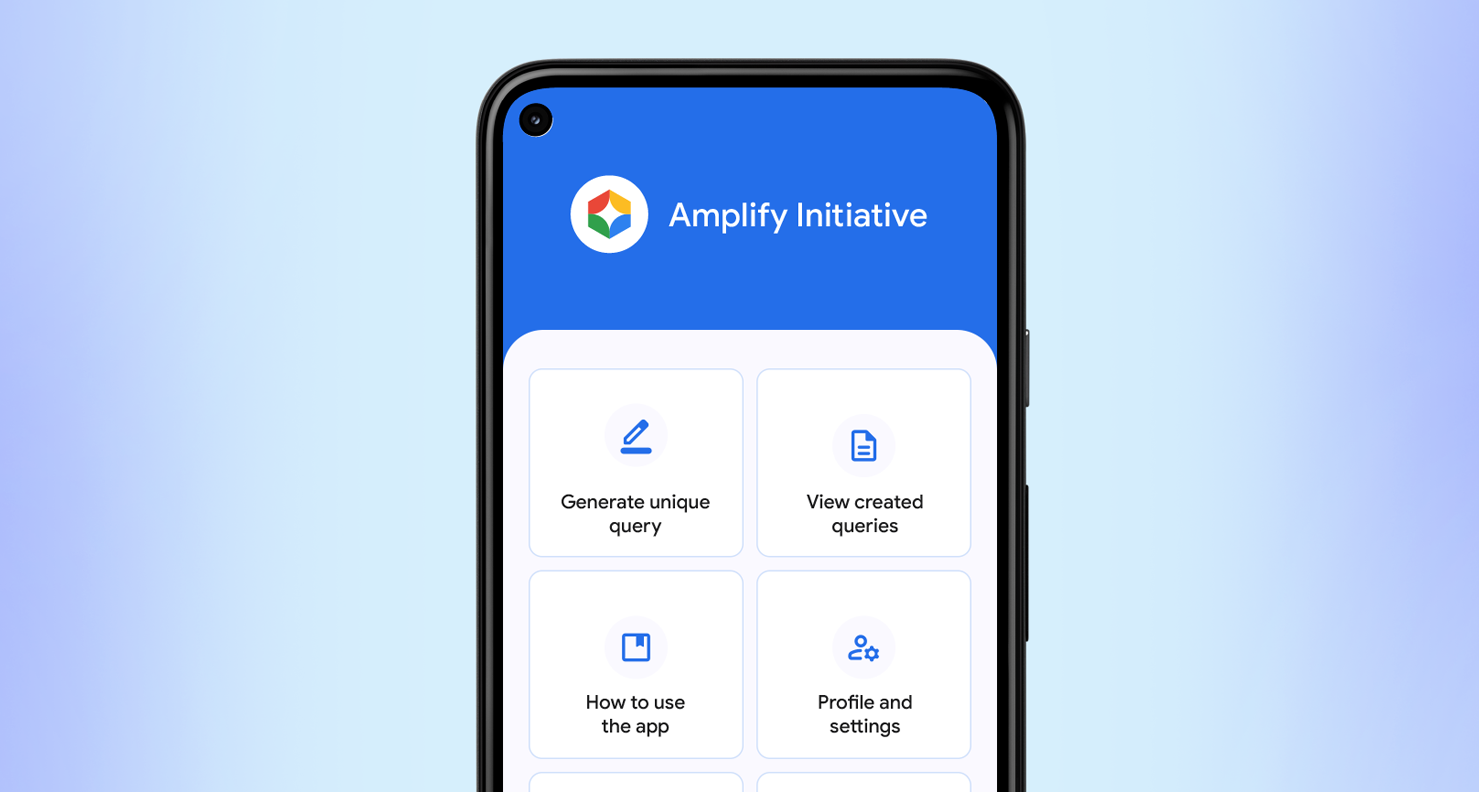
Google Research introduces Amplify Initiative — building a global, open, and community-based data platform to scale data collection in various languages.